|

Why You Shouldn't Use Hurricane Cylinders for Your Candles
January 06, 2026
-
8 min read
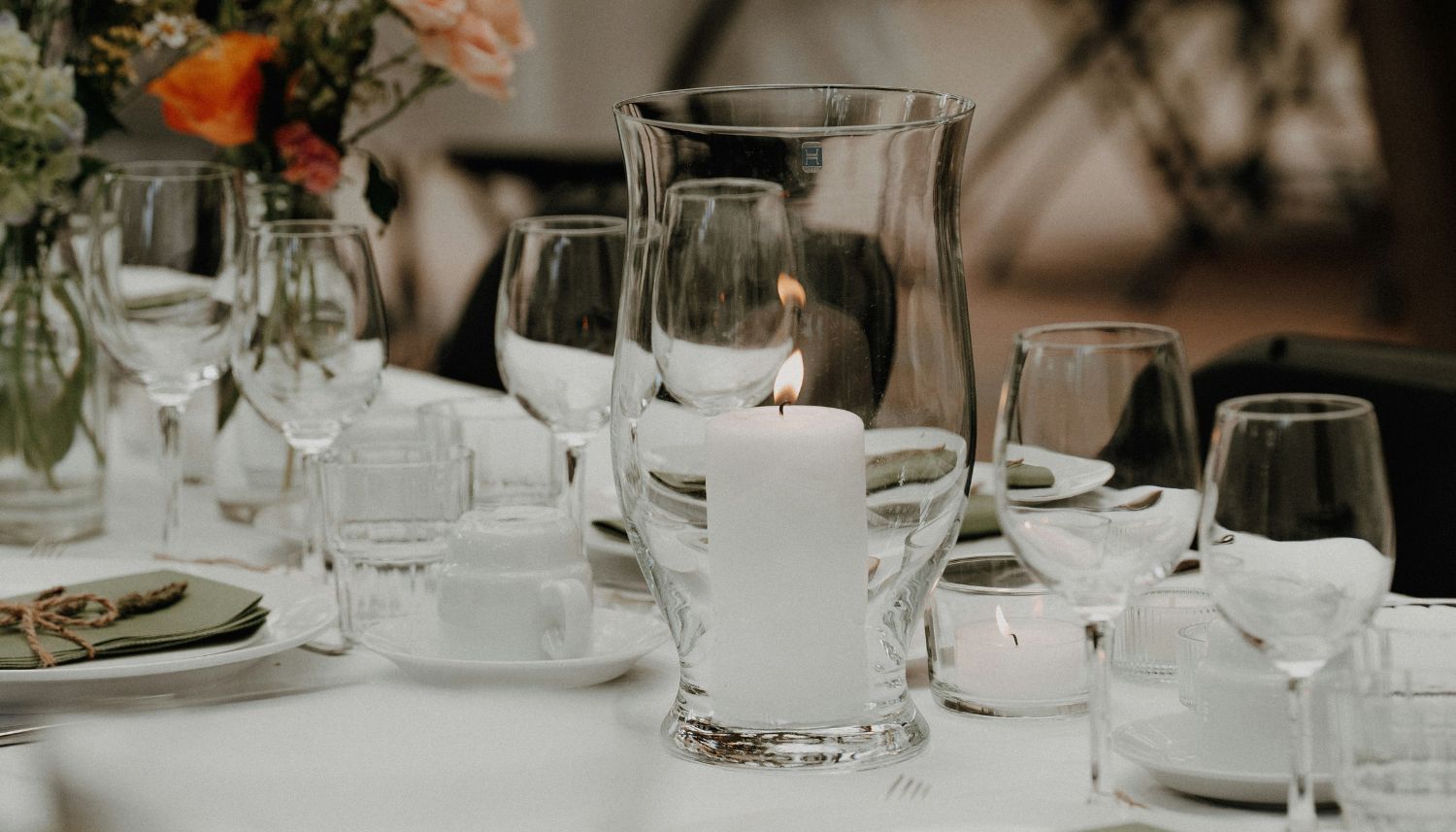
This is going to sound very contradictory to most of the information about hurricane glassware and how it can be used for your candles, but using a glass cylinder around your pillar or taper candles can actually do more harm than good. First let's talk about what hurricane glass and cylinders really are.
What are Hurricane Glasses and Cylinders?
Hurricane glassware was originally created as a way to prevent drafts and strong winds from extinguishing candles. Often, they have an opening on each side so that they can be set over top of a candle and candle holder. They are generally straight sided, but can sometimes have a more rounded diameter near the bottom of the glassware.
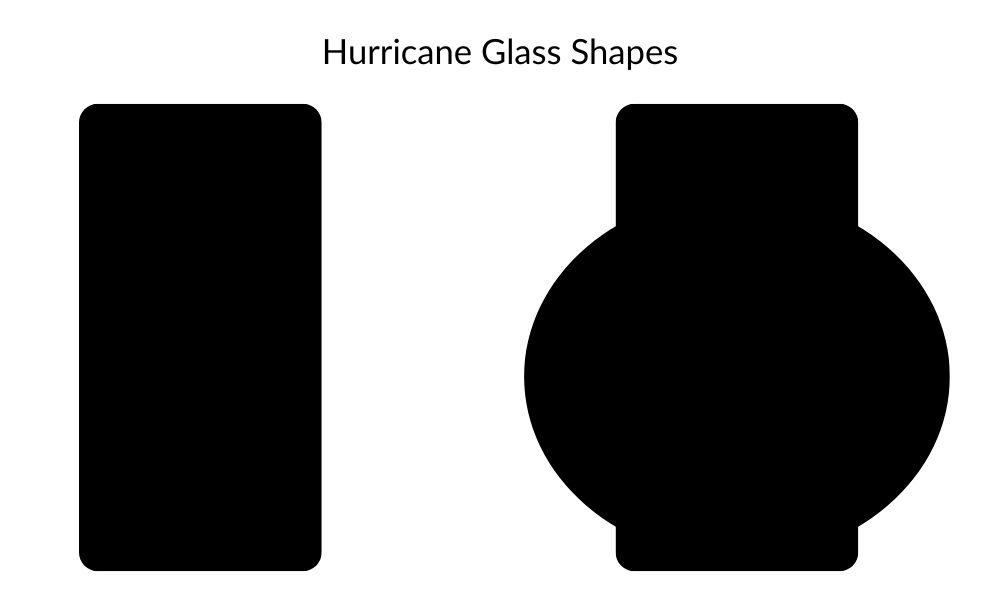
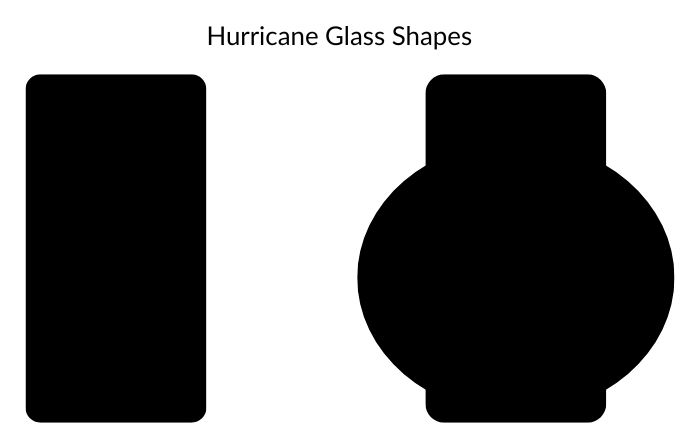
Similar to the hurricane glass is cylindrical glassware. With straight sides, hurricane glasses and cylinders can look almost identical. However, the cylinders only have an opening at the top; the bottom of the glass is solid and essentially acts as a vase.
Why do People Use These Glasses?
Both hurricane glasses and cylinders are used as candle holders by many people. Interior designers, wedding decorators, event coordinators, and individual home owners like the look of the glassware and the way the light bounces off of the glasses. Additionally, they like that the glass can act as a shield from drafts, and that it can catch any potential drips from the wax. When looking for inspiration for centerpieces, mantel decorations, or even just candle holders, hurricane glass and cylinders will often be presented in elegant looking photos.
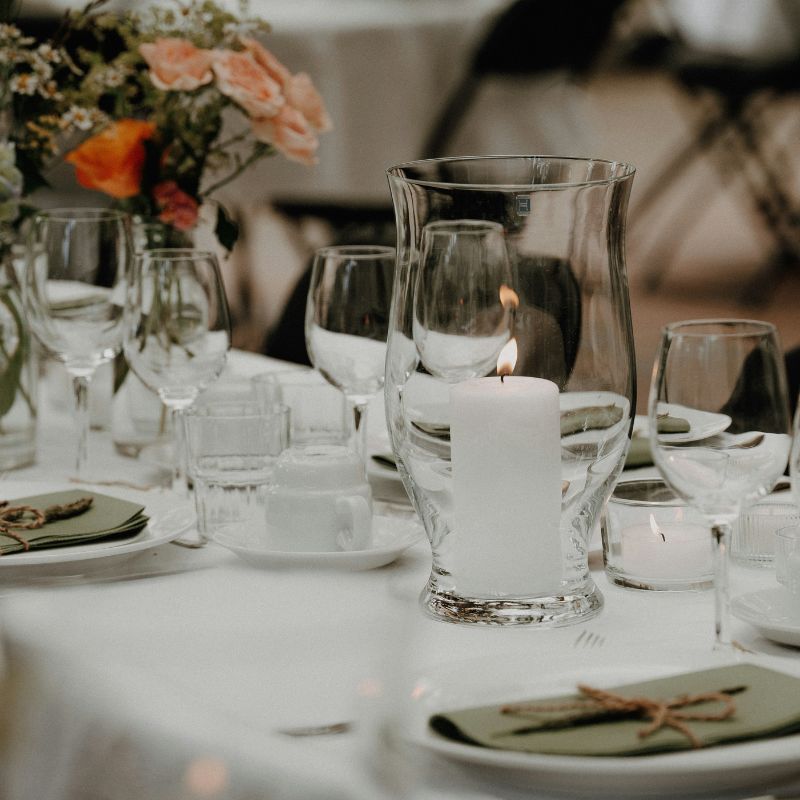

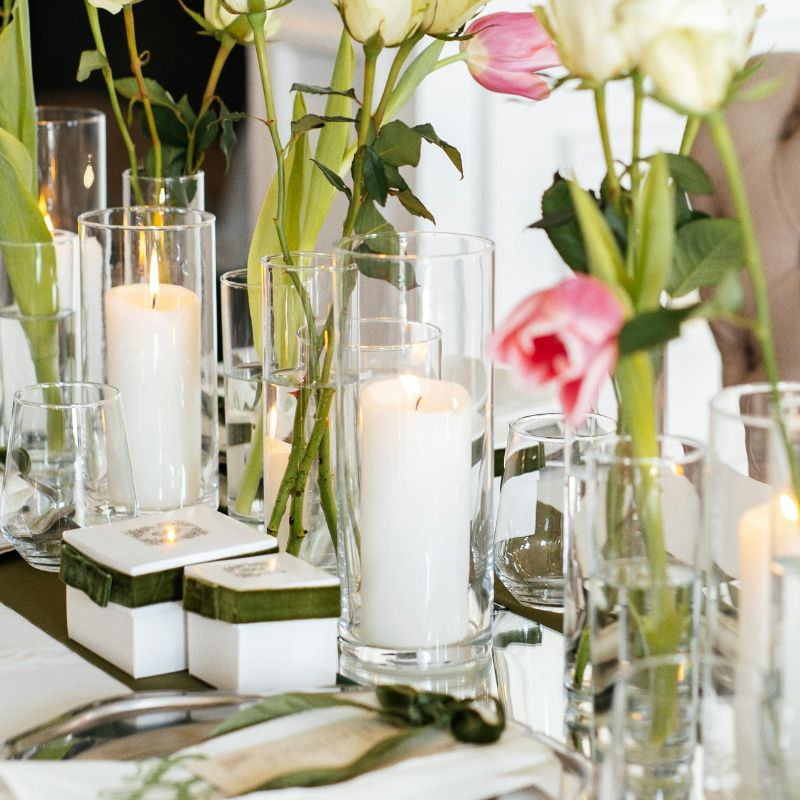
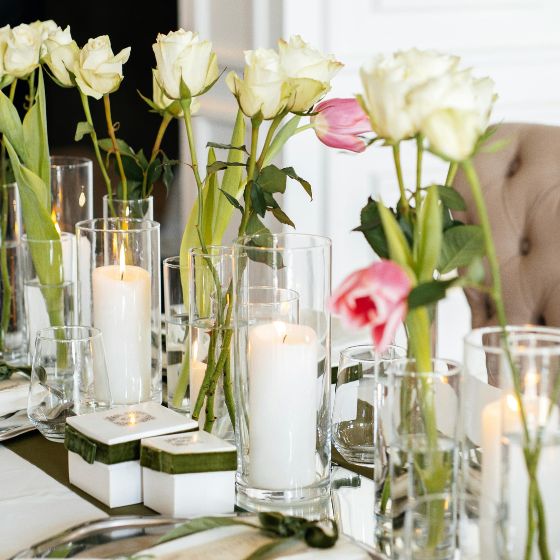
However, there is a crucial element to these types of glassware that can create issues with your candle and cause unnecessary and avoidable problems. These problems are created by glassware that is sealed on the bottom or set directly onto the tabletop which prevents proper airflow.
The Problems Caused by Hurricane Cylinders
When a candle is first lit within the confines of these glass cylinders, the resulting light can be beautiful. Yet, that beauty will not last, especially if the candles are left lit for a period of time. You may be wondering how these popular holders can be such a problem, so let’s talk about the science of heat and airflow.
The science behind candle heat and a flame’s airflow
The most common way of enjoying a candle and its fragrance is by lighting its wick and creating a flame. As with all fires, that flame needs oxygen in order to keep burning. While the wick burns, the candle’s wax is melted and used up as fuel for the flame. As the wax is used up, the flame goes lower into the container. Then, since the hot air produced from the flame rises out of the container, the oxygen has to get past the rising heat. The flow of cool air entering the container fights the flow of warm air rising out of it. This is where a flame within a container can experience drafts from inside the container rather than from a breeze or fan blowing externally. You can see this phenomenon in jar candles as well, which is why candle cappers are recommended to help the flame burn more smoothly. In regard to hurricane cylinders, this is our first issue because their intention of preventing drafts actually becomes the problem itself. In addition to this, that dancing flame will produce more soot that will blacken the top of the hurricane cylinder.
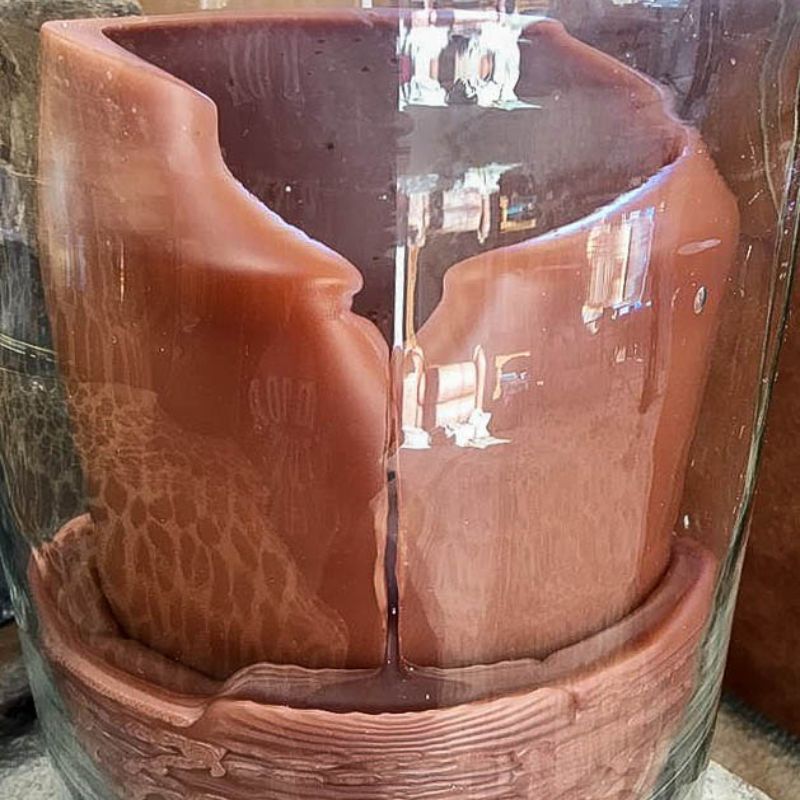
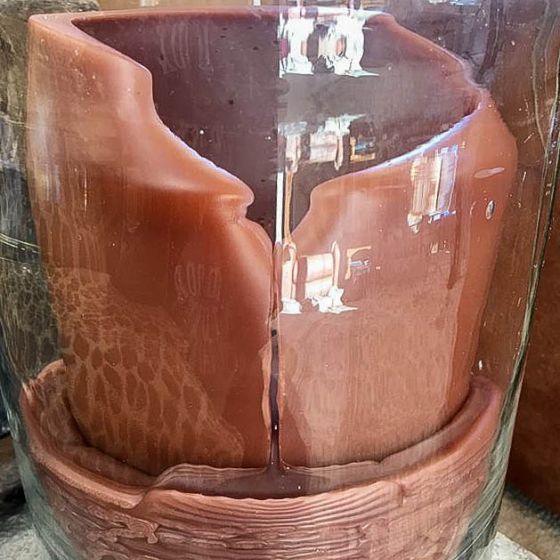
While that is issue one, the second problem actually can damage the candle and cause a great mess. We know that the candle’s flame produces heat and that some of that heat has to try and leave through the top of the glassware. However, not all of the heat will escape fast enough. This extra heat will be transferred to the wax of the candle and cause it to soften. In a jar candle, this is not an issue because it will simply help the wax melt all the way to the edge of the container. Yet, a pillar candle is intended to be its own container and hold all of the wax in by itself. With the extra heat softening the outside edge of the wax, the liquid pool can break through the outer diameter of the candle. Once this starts, the hot wax begins to melt the rest of the wall of the candle away, which allows more wax to flow through the side. As the level of the wax pool lowers, the length of the wicks exposed to the air gets longer. This causes the flames to get larger and therefore produce more heat. More heat means faster melting wax, more hot liquid wax means more running out of the side wall of the pillar, which at this point is carving a crevasse down the side. The cycle continues, bigger flames, more wax running out, a bigger crevasse down the side. The next thing you know, your pillar is burned all the way down to the bottom, and there is a pool at the bottom of your hurricane.
Now you may be thinking, “But, what about taper candles?” and that is a valid question. Tapers also can look really pretty within a hurricane glass. While the heat from the flame won’t create quite the same mess as a pillar, the heat could cause the taper to warp. A leaning taper will not burn correctly and it will cause wax to drip and make a difficult mess. Additionally, if the taper leans too close to the glass, the flame could overheat the glass causing it to break. Ultimately, whether you are using a taper or a pillar, the resulting heat can create a variety of problems especially if someone is not monitoring the candle.
Essentially, without constant care and attention, placing hurricane glasses or cylinders around your candles can cause your candles to burn poorly, waste wax, and dirty the glassware itself. However, this does not have to be the case. As mentioned above, these issues are created when the bottom of the glassware is sealed. This seal can be created by the glass itself such as with hurricane cylinders, which are closed at the bottom, or if a hurricane glass, that is supposed to be open on both sides, is placed directly onto a hard surface.
These problems can be avoided with proper use of a hurricane glass that is open on both ends.
How a Hurricane Glass is Supposed to Work
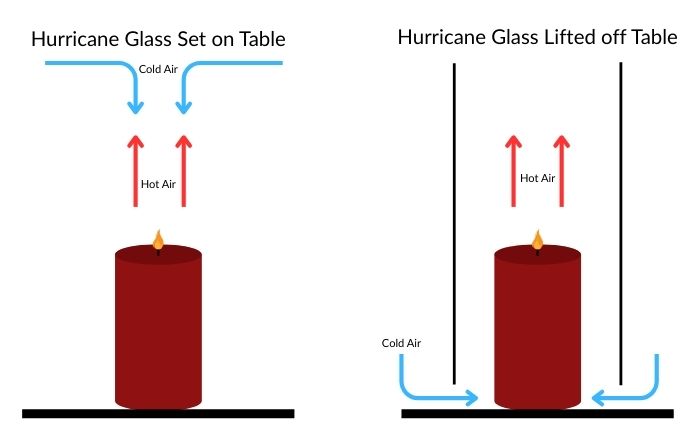
As we discussed above, closing off the bottom of the glassware does not allow the cool oxygen to get to your candle's flame. Therefore, we need to ensure that our hurricane glasses are lifted off of the table. Lifting the glassware creates an opening at the bottom allowing the cold air to enter underneath of the rising hot air. This creates a healthy flow of cold and hot air. See diagram below.
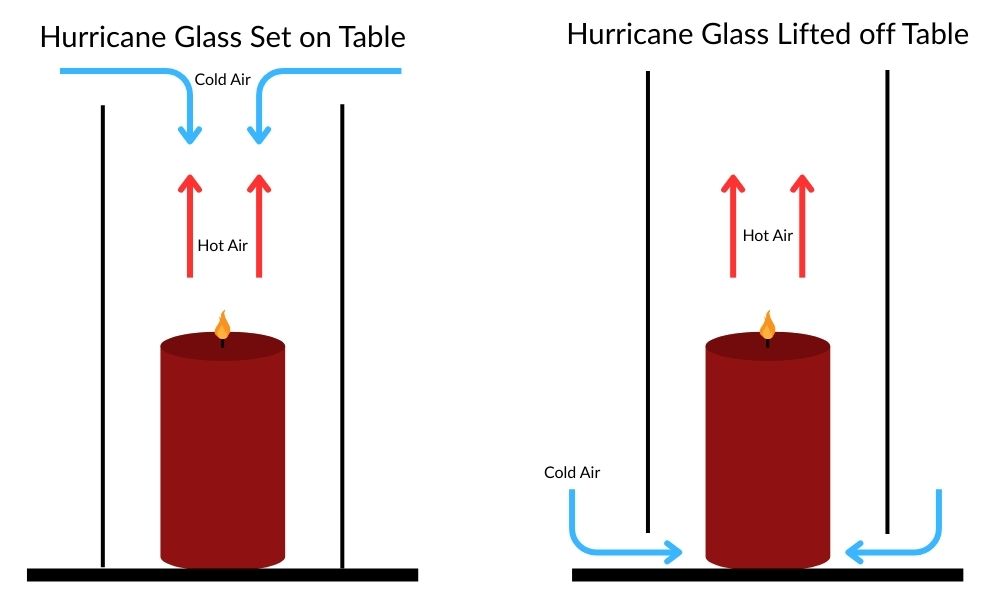
If this type of open ended glassware is not an option for your event, there are various alternatives that can provide the same atmosphere and benefits.
5 Alternatives to Using Hurricane Cylinders
Methods to create the same atmosphere
Many people like hurricane glasses because of the elegant appearance and the way they bounce the light from the candles' flames around the room. This desired look does not have to be sacrificed completely since there are various methods that can be used to achieve a similar effect. One such way is to use glass or metallic pillar and taper holders to reflect the light. Pillars and tapers naturally require holders and there are many elegant options to choose from. In addition to being a functional stand for your candles, they will also act as drip catchers.
Another way to bounce the light of your candles throughout your space is to use mirrors. Using mirrors as a plate underneath your candles will lift the light and make the room brighter overall. You should always use a plate or tray beneath your candles to prevent any heat or dripping wax from damaging your tabletops. The mirrors will act as heat protectant and have the added benefit of reflecting light.
Methods of avoiding drafts
While hurricane cylinders were created as a way to reduce drafts, we have looked at how they can be more harmful to your candles and cause a “draft” within the glass. There is no foolproof way to prevent your candles from ever experiencing a breeze, but there are a few things you can do to make your life easier during your events. The first thing you can do is a test burn the night before you need your candles. This way, you can see if any air vents are going to impact the candles’ flames. Additionally, this trial run will make your wicks easier to light on the day of because they will have already caught the flame once before. The second thing you can do is simply keep an eye on the candles during the event. Not only is this proper candle safety, but you can make sure that you can quickly relight any candles that may go out.
Now, as you and your guests move around the room, the airflow will change and may cause your flames to dance briefly. However, this is not something to be majorly concerned about because the breeze will not be enough to extinguish your flame and will be short-lived.
These above suggestions are especially helpful for indoor events. However, if you are planning to use candles for an outdoor party, you will definitely need to monitor them more closely since the weather and potential wind is unpredictable.
Methods for locations that do not allow an open flame
Some people claim that hurricane glasses and cylinders are a way to get past venues and event hosts that do not allow open flames. However, this “hack” is not reliable because there are strict rules at many locations. If your event is at a location that does not allow open flames, you will likely have to choose a different lighting source such as LED candles or other artificial lights. In contrast, if your reason for using candles is for their scent, you can choose to use multiple warmers around the space with scented wax melts to have the fragrance in the room.
Conclusion
Looking at the science we can see that using a glass cylinder for your candles can do more harm than good. Despite being created to reduce drafts, their restrictions of airflow cause more of a draft inside of the glassware. Likewise, they can make your candles melt improperly and create difficult messes. However, when using the right glass in the proper way, with openings on both ends, they can create the right flow of air and make a beautiful atmosphere.
Furthermore, these types of glassware are not the only way to beautifully reflect light with your candles. There are many other ways to get the same look and benefits from other accent pieces without the issues caused by the cylinders. Ultimately, these types of glassware are not your only option, and you have the opportunity to create something both beautiful and functional.

Share on Facebook

Share on X

Share on Pinterest

Share on LinkedIn
Related Products
0 Comment(s)
Recent Posts
-
Best Ways to Use Candles for Spring Cleaning
 March 24, 2026
 -
How Long Should I Burn a Candle?
 March 3, 2026
 -
3 Tips for Buying a Scented Candle Online
 February 17, 2026
 -
What to Know Before Lighting That Gorgeous Dried-Flower Candle
 January 27, 2026
 -
Why You Shouldn't Use Hurricane Cylinders for Your Candles
January 6, 2026